 Last week’s article Theresa Riggi Kills Her Children in Bitter Divorce Battle: Does She Have a Personality Disorder? asks the question what makes the unthinkable thinkable for some high-conflict people (HCPs) and/or some individuals with personality disorders? Why do some cross the line and commit murder, while others are content to perpetrate psychological violence like stalking, harassment, property destruction and parental alienation? How does the kind of woman who kills her children or husband (or gets someone else to do it for her) differ from your HCP wife, girlfriend or ex or your husband’s or boyfriend’s HCP ex?
Most high-conflict people or individuals with personality disorders aren’t violent and/or homicidal. However, I’d be willing to wager that women like Theresa Riggi, Susan Williams, Leisa Jones, Elaine Campione, Teresa Lewis and Clara Harris, for example, meet the criteria for being high-conflict people (HCP) and might also meet the criteria for full-blown personality disorders such as Narcissistic Personality Disorder (NPD), Borderline Personality Disorder (BPD), Histrionic Personality Disorder (HPD), Paranoid Personality Disorder (PPD) or Antisocial Personality Disorder (ASPD). For simplicity’s sake, let’s refer to these individuals as HCPs (high-conflict people) with the caveat that not all HCPs become violent nor do all HCPs have personality disorders.
Why some HCPs slide down the slippery slope of emotional abuse to violence and murder:
1. HCPs are always right. No matter how egregiously vindictive and destructive her behavior, an HCP believes she’s right. She’s always right. If she trashes you to the kids, destroys your property, tries to get you fired and/or badmouths you with outrageous lies to anyone who will listen—you deserve it. In her warped mind, she probably sees herself as delivering some kind of twisted vigilante justice when she harms, smears, bullies and attacks others. You wronged her (probably just in her own mind), so you must pay.
2. No empathy or selective empathy. This allows the HCP to hurt others without batting an eye. She doesn’t seem to feel remorse for hurting people she’s splitting black (a person she sees as all bad), unless she’s confronted with her bad behavior by someone whom she wants to think well of her, then she feigns remorse. In which case, she’s remorseful about getting caught; not about whatever abusive, inappropriate or criminal thing she’s done.
Additionally, any admission of wrong-doing or remorse is usually followed with a BUT . . . (insert reason why her bad behavior is really someone else’s fault—usually the victim’s). This individual typically only has empathy for her own pain and for people whom she’s currently splitting white (a person she sees as all good).
3. It’s never her fault. It’s always someone else’s fault. As previously noted, the person she’s been victimizing typically gets blamed. “Yeah, I punched him, but his stupid nose got in the way of my fist, so it’s his own damned fault.” It’s not a stretch to see how someone like this could just as easily justify homicide.
“He was exposing MY children to his new whore and I’d rather MY children be with God.” Or, “He broke my heart. He made promises to me. He swore to be with me until death us do part. Now he knows how it feels. He deserved it.” Or, “I killed his children to punish him.” To this day, former socialite stay-at-home-mom Betty Broderick still feels no remorse for killing her ex-husband, Dan Broderick, and his second wife, Linda Kolkena, and blames her victims for their own murders despite the fact Betty broke into the couples’ home and shot them repeatedly while they slept.
4. People aren’t people. People are objects. Many HCPs don’t see others as individual human beings with feelings, needs and rights. We’re objects. We’re either good objects who make them feel good about themselves or we’re bad objects because we make them feel bad about themselves (splitting). We’re really bad objects when we complain about being treated badly by them.
Most HCPs can’t make the connection that it is their own behavior that elicits negative responses from others. They’re fine; everyone else is the problem. HCPs dehumanize most people to justify their bad behaviors—especially people they feel have wronged them in some way. Perhaps killing a husband has the same emotional and moral impact as squashing an ant to some HCPs. He had it coming because he wouldn’t let me have my way. Many HCPs view healthy boundaries and limits as abuse or an attempt to control them and will go on the attack when you implement parameters for their behavior.
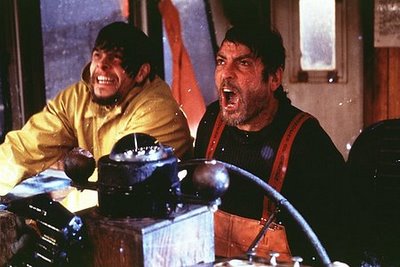 5. The Perfect Storm. HCPs don’t handle rejection like most people. Specifically, most people don’t become vindictive stalkers or snap when they’re rejected or things don’t go their way. The fear of abandonment, the fear of ridicule, the fear of exposure and the fear of being ignored coupled with the propensity for narcissistic injury-narcissistic rage can be deadly.
An HCP doesn’t even need to experience real rejection to go off the deep end—any perceived criticism or slight, questions about her behavior or challenge to her control can cause her to go ballistic. Rejection or just the thought of “losing,” having her lies/delusions exposed or appearing foolish can cause a narcissistic injury, which then triggers white hot narcissistic rage. This is when an HCP is most dangerous.
6. Knowing the difference between right and wrong or “The rules don’t apply to me.” Many HCPs don’t seem to know the difference between right and wrong. Well, they believe they’re always right and everyone else is wrong, but it’s not really the same thing, is it? Many HCPs can judge the behavior of others to be right or wrong or immoral, but they don’t appear to be able to do the same with their own behavior. For example, “It was wrong for Joe to cheat on his wife because all men are lying, cheating scum, but I had my reasons for cheating on my husband. It’s my husband’s fault I cheated on him.”
7. Greed, entitlement, professional victimhood and public perception. Judging by the behavior of many HCPs, they seem to lack a moral compass and sense of personal responsibility when it comes to money. They think the world owes them a living (especially their ex-husbands). As for their children, many HCPs seem to see their kids as just another marital asset to be stripped from their husband, so they can do a victory lap around the courthouse parking lot.
Many HCPs see assets, and I include children in this, as trophies to be won to prove they’re right and their exes wrong. In other words, if she can get everything, including the kids and destroy her husband in the process by leaving him financially, physically and psychologically devastated, she believes the court and her friends and family will see her as the perfect, innocent victim and her husband as the nefarious SOB.
Based on the news stories of women who kill or attempt to kill their husbands and children, the decision to commit murder seems to occur the moment they realize they’re not going to get the outcome they want in court. Their reasoning seems to be, My husband can’t win custody if the children are dead. Or, I’ll get to keep the house and his pension if my husband is dead. Don’t forget, even when it’s blindingly obvious to almost everyone that the HCP is the aggressor; she still believes she’s the one who’s being victimized.
8. Whatever Lola wants, Lola gets. And she doesn’t care who gets hurt in the process. It’s just more of the same old-same old it’s all about meeeeeeeeeeeee! One wonders if the only thing that keeps some HCPs from crossing the line of lethality is the fear of getting caught, which is why some may enlist negative advocates to do their dirty work for them.
 9. Negative advocates. A negative advocate (NA) can be even more impassioned about destroying the HCP’s target than the HCP herself (Bill Eddy writes about this in his books about HCPs). Oftentimes, the NA believes the HCP’s tale of victimhood and sees himself or herself as the HCP’s savior/avenger.
What does the HCP get from an NA? Having an NA go to bat for her probably hits a couple of HCP sweet spots. First, this type of individual loves getting others to do work for her that she could easily do for herself. Some HCPs have a lazy streak and see any kind of work as beneath them.
Second, it feeds her *C*O*N*T*R*O*L* needs. She gains a sense of power from pulling people’s strings—she is the Puppet Master and the NA is her wooden headed dummy. You see this with HCPs who are professional victims/waifs that get unwitting suckers to bully, mob and/or attack their targets for them. It’s also pretty crafty because if and when they get busted, they can say, “Hey, it wasn’t me, these other people did that,” which kinda makes them sneaky cowards.
What does an NA get out of championing an HCP? He or she feels like a powerful hero—especially if the HCP is love bombing the NA with adoration for coming to her “rescue.” In reality, most NAs are unwitting dupes. If and when the truth comes to light and the police get involved, the HCP will often throw the NA under the bus and claim that her former hero was abusing/controlling/victimizing her and the NA is then left holding the bag.
10. Their hard wiring is scrambled. Sorry, but reasonable, good people do not think it’s okay to destroy or kill others because they didn’t get their way, want to keep the house or are hurt/angry for whatever reason. In fact, most of the really nasty and destructive things HCPs perpetrate on their targets don’t even enter into the realm of possibility for the rest of us—or if they do, we don’t act on them and are embarrassed to admit we even had those kinds of thoughts in our darkest hours.
It’s beyond our comprehension, which is why we’re so gobsmacked and initially defenseless when attacked by HCPs. This is also why it doesn’t pay to try to do battle with them on their terms. You can’t out-think or out-crazy the crazy and malicious things they dream up on a 5-minute coffee break. The best thing we can do is to protect ourselves legally, document everything and keep a safe distance.
If you’re in a divorce and/or custody dispute with a woman or man whom you suspect is high-conflict or has high-conflict traits, take every precaution. Never underestimate their ability to cause long-lasting damage to you and the people you love.
Want to Say Goodbye to Crazy? Buy it HERE .
.
Shrink4Men Coaching and Consulting Services:
Dr Tara J. Palmatier provides confidential, fee-for-service, consultation/coaching services to help both men and women work through their relationship issues via telephone and/or Skype chat. Her practice combines practical advice, support, reality testing and goal-oriented outcomes. Please visit the Shrink4Men Services page for professional inquiries.
It’s actually freaky to me that this was posted today. I’ve been going through a custody evaluation for 5 months now – separated for almost a year. We are expecting the report literally any day now. My wife, who is definitely HCP and “at least” NPD (according to multiple therapists, and maybe worse than NPD) took my son when she left. I get limited custody of him, and ZERO custody of our 4 1/2 month old daughter (long story). But no visitation at all. Not “allowed” to see her. My vindictive ex, who has been withholding my kids, lying and trashing me to the custody evaluator, stalking me physically and online, following me, stalking my house, etc.. is textbook NPD, based on what I’ve read. She also has a brother who is literally a sociopath and carries a gun. This has always been my fear, what this article talks about. She is ALWAYS right and ALWAYS gets her way. I don’t expect the custody evaluation to go her way though, as I haven’t done anything wrong and only want 50/50 custody. She wants to destroy me and take my kids. I’ve thought about this so many times… what’s going to happen when she doesn’t get her way? It’s scary to me. Sometimes I felt paranoid thinking those things, but this article – while actually stoking my paranoia! – makes me feel like that’s not misplaced… and maybe it’s a good thing… we gotta watch our backs, guys and girls. Thanks, as always, for the great info. This site is outstanding.
Separated for a year with a 4.5 month old daughter? Dude….
Indeed… In a nutshell, a poor decision on my part, obviously, and a lesson. BE SMART, fellas. But we were still married and I am a guy. A sucker and a dumba**? absolutely.
CK, situations like yours can become very dangerous right around the time the HCP realizes she is not going to get what she wants. It’s like Dr. T says:
You need to do dome thinking about how to reassure the ex that she’s going to see the kids in hopes it will soothe her fears and anger somewhat and avoid an outcome that could be far more difficult, such as her abducting the children or worse.
You also need to push for some safeguards in place to ensure that the kids will be safe. Figuring out what those are may be very difficult because many of them could aggravate your ex even more. The courts seldom put any meaningful safeguards in place, they think that a court order or restraining order is enough to motivate compliance yet with HCPs, sociopaths, narcissists, borderlines, etc. such orders are generally ignored.
I wrote about a December 2009 murder/suicide involving a child custody decision in Orange County, California, and how the court failed to take even the most basic precautions in what was obviously a case involving an HCP who was flouting court authority. Simple precautions could have prevented the deaths.
In this case, it was the HCP grandmother Bonnie Hoult who killed her grandchildren, her daughter Elizabeth Fontaine (also an HCP), and then herself. The grandmother and mother had attempted to seize sole custody of the children by taking them out of state to Texas and ignoring court orders and reigniting the battle in Texas. The California court correctly could see what they were doing was wrong, but then failed to put in place the very simple step of having law enforcement transfer custody of the children to the father’s relatives. It was just a short time later (couple of hours!) when the grandmother killed them all with a gun. It was clear there was risk of child abduction given the circumstances and the safeguards against that could have also prevented the deaths of the children.
Hi CK in Philly. DO NOT underestimate your wife. I am talking from experience here and you should definately go by your gut instinct. Get and DEMAND legal help sooner rather than later. It was too late for us.
Great article Dr. Tara.
I’ve been following the Campione case closely and the jury is currently deliberating. I suspect that her own video recordings will incriminate her and refute the defense claims of vicimhood. If not for her own video recordings, she would easilly get away with murder.
What I’m really wondering is that some of these characteristics described for an HCP are also similar to that of a sociopath. What is the difference?
Hi Denis,
In some cases, HCPs are sociopaths. However, most sociopaths don’t like being called sociopaths, so therapists and evaluators describe the behaviors, but withhold diagnostic labels out of fear of enraging these folks.
This is understandable because HCPs (or whatever you want to call them—this seems the least offensive label, that is, until they catch wind of it and take offense—again, always getting it backwards—their behaviors are the problem, not the diagnostic/legal labels) can be quite malicious and vindictive.
Also, letting HCPs know that their behavior is high-conflict is warned against by Bill Eddy. He believes when a Non uses the HCP label (or any suspected PDs) it is usually done out of anger to “hurt” the HCP and, Eddy suspects that the person who uses the labels HCP, BPD, NPD, etc., are themselves the HCP.
I agree with Eddy that it’s unwise to share these labels with the person you suspect is high-conflict or has a PD, but not for the same reasons. I think you shouldn’t tell your wife/gf/ex you suspect she has a PD or is high-conflict (or email them links to Shrink4Men) because it will be perceived as criticism or as an attack, which will then trigger her to get even nastier and possibly accuse you of being HCP, etc.
Eddy agrees with the above point, but here’s where he loses me. In It’s All YOUR Fault! 12 Tips for Managing People Who Blame Others for Everything, Eddy has a section called Be Wary of Labelers in which he states (p. 330):
I have emphasized having empathy and respect for HCPs. They didn’t choose to be this way, and many of them have been victims of abuse or trauma, which has triggered overactive high-conflict thinking. I’ve encouraged you to be sensitive to HCPs, their Negative Advocates, and the Community you’re in.
Here’s my first problem—if the HCP is actively abusing and/or trying to destroy you, your reputation, your career and your other relationships, it’s pretty darn hard to have empathy for and be sensitive to the HCP’s underlying childhood injuries or whatever caused them to be the way they are and their feelings and well-being. I think it’s only possible and safe to have empathy for these individuals (the ones who actively abuse and violate the rights of others) from a very safe distance. They are pitiable, but not while they’re actively harming you. Go ahead and have empathy for them once you’re out of harm’s way, meanwhile, your time would be better spent protecting yourself from the HCP and doing damage control.
Eddy continues:
However, as knowledge of HCPs grows, some people are already using this knowledge to show disdain for others and to disregard their concerns by openly labeling them. “You’re a Borderline.” “You’re a Narcissist.” Or “You’re an HCP.”
Okay, but Eddy has built his career on writing about the label HCP. Most people who are being messed about by one of these types are so relieved once they’re able to figure out what’s going on that’s it’s only natural to want to exclaim, “My God! This is what I’ve been dealing with.” Also, let’s get real. Parental alienation, smear campaigns, character assassination, fraud, verbal and physical abuse, false allegations and the host of other cruel behaviors engaged in by HCPs and NAs when they’re on the attack are despicable (and in some cases criminal) and merit disdain. Where’s the compassion for the target of the HCP?
How do you have compassion for someone who’s actively teaching your children to hate you or bankrupt you or destroy your life? Perhaps it’s possible if you’re Buddha, but most people aren’t. They just want to get on with their lives and not have to keep defending themselves from the relentless attack style engaged in by many HCPs.
Eddy continues:
Ironically, the people who openly label others this way tend to lack empathy and remorse. This brings us back to the central message: HCPs get it backwards. You’ll find that the people who use this information negatively in public often have the personality traits of HCPs. They just can’t see it. I hope that you’ll use this knowledge privately, without openly labeling those around you.
Or maybe the target of the HCP has run out of empathy after being abused, manipulated, blamed and gaslighted for years. Again, I don’t think it does any good to have a conversation with the HCP that you suspect she has a PD or is high-conflict because she’ll only attack you for it and use it against you. On the other hand, abuse needs to be exposed. You need to acknowledge the elephant that’s breaking wind in the living room and preparing to stampede with your attorney and evaluators.
In my experience, it’s usually not especially difficult to distinguish the real HCP. HCPs can rarely substantiate their claims with real evidence whereas a Non who has been documenting the many lies and abuses can substantiate his/her claims. Most HCPs are only able to offer hearsay, their ever-changing litany of lies/half-truths/exaggerations/distortions, non-credible NA witnesses and emotional-based reasoning. However, they’re often successful because most people are susceptible to persuasive blamers rather than boring documentation that they have to sit and read through.
Eddy concludes:
On the other hand, I encourage you to share this general information with those around you so that you have more support in your own struggles, and so that more people recognize these patterns and avoid becoming Negative Advocates. You may have an HCP i your neighborhood, workplace, or family, and it can help if you can work together. You can say to others, “We might have an HCP problem,” or “So-and-so may be an HCP.” If the goal is to help the group and help the HCP, then these phrases are appropriate. If your goal is to put someone down and feel superior, well, you already know what’s wrong with that!
This contradicts what he says in the previous paragraph, but perhaps I’m misunderstanding. I think an appropriate goal when dealing with an HCP is to educate others and yourself in order to protect yourself from the HCP. It is up to the HCP to help him- or herself, which they’re unlikely to ever do if they won’t recognize their own behaviors as the source of their problems.
Thank you for the excellent reply. Through my own experience I definitely agree.
These HCP’s have a complete lack of empathy for others, which seems to me to be sociopathic. Combine a lack of empathy with always blaming others and it’s a toxic mix that limits personal responsiblity and growth as a person.
I think such labels would be viewed as name-calling and give the HCP an opportunity to initiate conflict and justify their victimhood. Personally, I try to follow simple rules for self-protection…address the behavior, not person and don’t fall into traps that are intended to create conflict.
Dr T:
I can’t tell you how much I appreciate your explication of Eddy here, unfortunately I’m not sure how it will change matters other than to prepare the rest of us out there for the difficult reality (not at all meant as a discouragement – more of an acknowledgement of the score).
The attitudes like Eddy’s are so disturbing. It’s like a society machine right out of Kafka designed to keep us in hell.
I don’t understand why psychologists and lawyers practicing here have anchored in on a … what can we call this?, a “psychological forensic” basis of applying these understandings. Is there a shred of evidence to support this attitude? I doubt it, yet that is exactly the attitude I’ve found among almost all of the practictioners.
Why on earth is this not based on evidence? Behaviors, actions and evidence. That should be it.
I understand that while it may be comforting to me to finally understand my trials and abuse in the context of BPD, HCP and NAs – but that it is not mine to actually apply these labels for purpose of judgment, that we have a system for that, with trusted agents.
But certainly it should be mine to report the evidence and I should be able to trust that the evidence will be evaluated and ruled upon.
Instead we are given this Freud-like heuristic system that beats reality into abstract boxes, i.e.: “he says she is BPD or HCP or complains about those behaviors and has taken the trouble to gather evidence, therefore HE is to be suspect” … meanwhile, the evidence provided is at best generalized and dismissed, if acknowledged at all.
And yet, we have the “Violence Against Women Act” of 1994.
http://en.wikipedia.org/wiki/Violence_Against_Women_Act
Interestingly enough, it’s up for ratification in 2011. This would be a good post to shotgun to Congress before they revote.
Maybe we need a “Violence by Women Act.”
I should start by saying that other than pushing me to the brink of ending my life, I don’t think the ex would have gotten to the point of murder. I dodged the marriage bullet with her, as well as the children bullet (though, barely, in both instances – she’d started talking about wanting kids towards the end of the relationship, so she could be more like her sister). I have no doubt that if either of those things had come to pass, I’d be in far worse shape than I was and am.
Your list of 10 items, though, is chilling in its accuracy in describing the dynamics of my former relationship. Again, not to the degree of murder, but in the constant drama and power plays; #4 and #9 in particular. At some point, I may have my own take on the Negative Advocate phenoenon, and how we get enlisted into playing that role ourselves, until she splits black on us.
Ah, good times all around.
Dr. T,
Great article although it is freighting when you see a freinds reality spelled out before you. I’d love to see a follow up article to this with suggestions on how to protect yourself from these behaviors. Yes of course the obvious is documentation and to get out, but as we all know sometimes this is not an immediate or effective enough option especially when children are involved. Would it be prudent to notify authorities of your fears? How can this done without making yourself look like the perpetrator? How can the courts be convinced to take your fears seriousely when all they see is the “sweet” side of the abuser? What preventive actions can you take to stop a possible accusation from an abuser of a criminal charge, such as her claiming she was pushed down the steps when she actually fell or threw herself down the steps?
My husband has his ex – on tape – talking to a GF about “having him clipped” for $5000. He tried to bring it up in court and her lawyer got it thrown out because he didn’t tell her he was taping her phone calls.
So – he could have gotten whacked on a technicality. Nice.
Wow. That’s ridiculous. The government can use illegal wiretaps (Patriot Act), but a man trying to defend himself and his children cannot.
I was an NA!! I am a female – 41 years old – divorced 4.5 years. I developed a friendship with another female (we had both just left our husbands when we met) who is clearly (it’s clear to me now) a BPD/NPD. I was her NA. I believed EVERYTHING she told me about her “abusive” ex so I assisted her (the things I did were not things that she felt herself capable of doing (the learned helplessness thing)). I explained all her (GOBS!) of legal paperwork to her because she kept taking her poor hapless ex to court (he has money) to fight about the kids. I dumped her about 3 months ago when she started stalking (terrorizing is more like it) her ex BF. Her texts and emails were sick and revolting and really abusive. I realize now (when I step back and look at all the behavior) that she is an abuser (she was abused as a kid). Dr. Tara’s blog has been very helpful to me in seeing her behavior. I did apologize to her ex….he also admitted to being an emotionally battered husband (he said that he never realized it until I asked).
I can also comment to how to deal with a NPD ex and not lash out. My ex is likely NPD. He blows up, rages, flips out on the kids (my youngest coined it: when daddy’s head blows on fire). You have to go at them sideways….you can’t lead a full on frontal assault (calling them narcissistic etc…) or they will rage and freak out on you (which is the last thing you want). No doubt, women NPDs are a little different (more driven by emotions?), but not that much different. you have to draw some line of (fake) understanding with them (“I get why you think that but….”)in order to get them on board with whatever it is you need for the kids. Plus, I have learned that educating older kids is imperative so that they can understand that it’s not them (the reason their parent’s head blows on fire and they get blamed for some dumb transgression against the perfection of that parent’s vision for them). my oldest is a brilliant, beautiful, talented, honors student who can’t do anything right in his eyes (unless of course we are in front of other people in which case he tells her how proud he is).
oh, and I get no spousal or child support of any kind. we are middle class and each “pay our own way” post divorce. He is a very “stand up” guy in public, but he drinks too much and blows up in private. He is the most arrogant, self aggrandizing blow hard I’ve ever known (but was super sweet and attentive when we first got together). He insists on perfection from his family and yet carries around 80 extra pounds. He tells me how he “brags about how I’m the best ex wife ever” and then tells our girls what an irresponsible parent I am….His last GF (1 year) also dumped him saying he was a condescending jerk to her constantly. I could deal with him except for how he treats our amazing daughter. every time I am around him I want to just get away from him.
I am a scientist, but want to go back to school (law) to become a men’s family court advocate. I’m disgusted at how poorly men get treated in the family court system.
You don’t know how nice it is to hear from a woman who cares about men. Thank you.
My father was a minister who was a PhD counseling psychologist, yet his second wife had BPD. He was so thrilled to have a wife half his age he was blind to her mental illness and thought we kids were just being loyal to Mom when we tried to warn him. Finally, on Christmas Eve she mashed a wine glass and cut up her own arms. Then she called the police and claimed my Dad had attacked. Made sure my Dad spent the holidays locked up in jail. After this, he came to his senses and filed for divorce. She cleaned him out and he ended up leaving no inheritance.
I am divorcing my wife who has had BPD, now under control with drugs and therapy. She was mentally healthy when we marred but fell into postpartum depression that worsened into multiple disorders including BPD, anxiety disorders and agorophobia.
Since coming to this website I see them all over the place…and with some self-assessment and peer-checking, have concluded that it’s not because I’m suddenly paranoid, like the hypochondriac who goes to WebMD and decides she’s dying of the disease du jour…they really are everywhere.
#4 got to me right away, as I just had a ‘revelation’ about that re: my supervisor. She uses her subordinates as ‘human shields’ meaning, that if our work product is something that will make her look good to superiors, she will encourage and push it. If it doesn’t, even if it is something expressly requested by our customers…she will tell us it’s not ‘value added’ (or some other business lingo b.s.) and routinely throws her team members under the bus. People are clammoring to get out of her department! She goes around picking on people, and while an questioning attitude is encouraged by our employer, she will make you pay should you dare question her.
It seems to me that there are no ‘equals’ in her mind; only those above her, such as her manager (whose butt she kisses) and those below her, such as her subordinates, who she rakes over the coals (in a way that is legal and by using business lingo…she’s slick!).
That notwithstanding, the section that really ‘got to’ me was this: “…most of the really nasty and destructive things HCPs perpetrate on their targets don’t even enter into the realm of possibility for the rest of us—or if they do, we don’t act on them and are embarrassed to admit we even had those kinds of thoughts in our darkest hours….” I believe that is key.
All of us have dark moments (especially after being abused for years), where we perhaps imagine horrible things…I used to see a ‘shadow’ of myself standing behind my AXH, wielding a knife over my head, ready to strike. The difference is, those of use who are not HCPs know where to draw the line…we don’t act on those ‘impulses’. It freaked me out to believe I had it in me to be so violent.
I have a problem with thinking of these types as “crazy.” To me, the difference between ‘crazy’ and ‘evil’ is choice. Crazy means you can’t help it. Evil means you can, but you choose wicked actions.
They have to know, somehow, what they are doing. If they didn’t and couldn’t help it, then they wouldn’t be able to suddenly do all those things and say all those things you’d been begging them to do for years, once you finally stop caring and decide to end things.
If they really loved you or cared about us at all, they would have changed / been good to us/listened to our pleas of treating us better before it got to that point.
Otherwise, they are just keeping SOs around to serve their purpose (meal ticket, free babysitting, financial security, social status, and my personal favorite, normalcy prop).
I felt like a ‘thing’ with my AXH – there for his purpose when he wanted something…but left alone and given zero affection or positive attention in the meantime.
I hate to be ‘that guy’, but your point ten header should read “Their”, not “They’re.”
I don’t decry spelling errors as to me it sometimes reflects the passion one has for expression.
I wonder if high conflict people are those that get overly angry talking politics, religion and or are they also argumentative? I feel high conflict because I’m always at odds with myself trying figure out life’s living. Now that causes conflict within me. I’m always conflicted over something or other. Though not with people, well, not in the last few years, I just keep it all to myself now, argue with myself over this or that. I wonder if that makes me high conflict or am I just confused all the freaking time. Especially when it comes to a girlfriend. Oh well.
Great article,T.
And don’t forget the recent case of Susan Wright – the woman who stabbed her husband 200 times tying him to the bed (mutilating him while he was alive first) and then burying him. I read the chilling details on a crime website and was horrified for days. (She had played the victim waif before getting married and claimed he abused her, when some former girlfriends testified he in fact was gentle. Whatever the case, if there are problems with a husband, then leave and divorce – don’t murder and claim the insurance money! The story she concocted about his ‘absence’ claiming he had abandoned the family was pretty devious too.) There is a crime website which has the true details. Forensics completely proves premeditated murder with the husband tied up, now she is claiming ‘self-defense.’What was also interesting is how she changed her appearance in the court to elicit sympathy.
Also the German pop-singer Nadja Benaissa who knowingly gave HIV to her ex-boyfriend as revenge on a break-up sex encounter and was acquitted with a suspended sentence as she cried and claimed ‘deep remorse’ in court. And he was not the first she tried this ploy on, though the other man thankfully did not get HIV. She played the victim so much in court all was forgiven.
These cases should act as warnings that when red flags appear, run, really run for your life (and your privates, if you read the awful details of Susan Wright’s stabbing process.) Had these crimes been committed by men, would the jury have had problems imprisoning them? Full blown double standards.
Loved the article. Very insightful. Keep up the GREAT work! David M.
Here’s a current case of a probable HCP killing her kids, in Canada: http://www.torontosun.com/news/torontoandgta/2010/11/14/16138721.html
Last word I heard was that the jury’s been out for 5 days. I’m going to go out on a limb and guess that they’re going to give the mother a pass based on “temporary insanity”. If they only knew.
It’s like reading from a textbook. This case hits all the behaviors listed in last week’s article.
I can’t even begin to imagine the Hell the father is going through.
Looks like the jury didn’t buy her tale of woe. Guilty of first degree murder: http://www.torontosun.com/news/torontoandgta/2010/11/15/16148926.html
Unfortunately, no death penalty in Canada, so she’ll be eligible for parole in 25 years (though I’m sure she’ll appeal this).
Followup story of the impact on the father: http://www.torontosun.com/news/torontoandgta/2010/11/17/16192696.html
Check out the comments. Unbelievably, some women think the mother should get a free pass, because she “claims” the husband abused her. No proof. Charges were dropped. Totally unproven allegations. But he’s a man, so he must have done it!!!
Ah, someone who recognizes manipulation when he sees it!: http://www.torontosun.com/comment/columnists/alan_shanoff/2010/11/19/16228646.html
I am very happy that my wife found this site and showed it to me. Just today, I had an incident where my HCP ex-wife stole something from me. If you can believe this, it was something as dumb as School Pictures. She refused to give them ALL back. I sent her an e-mail telling her to send them back or I would pursue further action. She said NO (she thinks she’s above the law). I called the police, they called her and then she gave the pictures back. It might sound trivial, but this is an every occurrence thing with her. She really believes I am the one who causes the trouble.
Thank you for letting me post on here, I will be reading all the articles I can about this. It’s nice to find out that I’m not alone in this battle.
I realize this article discusses women, but I can’t believe men don’t suffer from this too – my children’s birth father exhibits all of the symptoms described above to the tee. I consider myself lucky to get my kids somewhere safe before things escalated to accomplish his threats (now many years ago).
I also have a couple of male friends who’ve been married to women who seem to fit this description but again in varying degrees.
It’s hard for anyone outside of a relationship to know all the dynamics that go on inside – but I can certainly empathize with the father in the current Toronto-area case. The advice that served me best: keep a record, and keep to strict, easily verifiable facts wherever possible – these people often make accusations that may be proven nonsensical if you’ve got a recorded history and can avoid the natural defensive reactions.
Guys can definitely be HCP… but the point of this website is to help guys figure this stuff out. In our society, most of the attention to abuse/victimization in relationships has focused on women being victimized/abused by men. Dr. T is trying to bring to light the fact that it works both ways – and at a high frequency. There are a LOT of men who take a s**tload of abuse from their wives/GFs… but again, our societal norms are such that men could NEVER be abused by women! Not the case. And many times, guys feed right into that. We’re clueless and never stop to think that maybe the person we are intimate with is actually the source of our despair. Men are “go with the flow” types… we try to be tough. Some of us see the best in people (and/or project our own naivete onto our significant others). We don’t WANT to be the “victim!” Plus, girls talk a lot more amongst themselves, and it’s probably more likely for another woman to say “I think you’re husband is emotionally abusive.” Guys don’t roll like that. IF we talk about it, it would be a miracle for another guy to know what emotional abuse was, let alone to say “hey, buddy, your wife is abusing you.” It just doesn’t work that way with guys.
There is a lot of reading material out there for women to read about abusive men… us guys don’t have much! I started by doing a “Google” search for “domineering wife” and “what is emotional abuse” (because my parents actually said they thought my wife was emotionally abusive – I had NEVER considered that)… I found this site, and I seriously almost started crying when I started reading this stuff. It was my life, spelled out. Men need sites like this. We need to be educated, because we’re different than women. But men being abused by women is real, and it’s dangerous. I was already in therapy when I found this site… I took some of the pages to my therapist, and said it was like a gut punch… she told me, “some lessons are harder than others to learn.” She knew. I didn’t. Dr. T knows too… THANK YOU SO MUCH, DR. T.
Read this and was intrigued by the concept of ‘Negative Advocate’. I received an email from what appears to be an ex-friend, who my actual ex spends way too much time with. Her email was long and read just like my ex had written it, same vitriolic tone, same diatribe. How I abandoned the kids, how I should have stuck it out, how my ex is wonderful person. She is totally on board with my ex and am wondering when she’ll get thrown under the bus. My ex has always latched on to people who she can manipulate and shut out people who would push against her. I mean, our marriage counsellor was useless and did nothing for her (because the MC called her out in session 4 and proceeded to talk about how we should get divorced), child impact classes were useless, etc.
I wasn’t really going to post this until my parents contacted me.
My ex had been sent a copy of this email by her new recruit and proceeded to forward it to my mother, stating what a horrible person I was, “see, someone else things the same, your son is a liar”.
I didn’t and will not respond to these communications. I’ve learned the hard way that only adds fuel to the fire.
Everything here reads true to my marriage. Thankfully I have a therapist to speak with, a loving partner who isn’t BPD/NPD and feel strong to continue having a healthy relationship with my two children. It’s sad so many of us went through the same thing, in the name of love, but it’s also good to be in the company of those who understand. Thanks Dr. T. Keep up the great work.
Unbelievable – I live in South Africa and the following link is another example of a coldblooded and frustrated woman hiring two hitmen – in this case to murder her daughter’s ex boyfriend that she fell in love with – and then showing no emotion or remorse after being arrested when the Nigerian “hitmen” set her up with the police and victim’s cooperation.
http://www.news24.com/SouthAfrica/News/Cougar-wanted-Bulls-player-killed-20101119
Dr. Tara, is there really a solid basis for the popular notion that “abusers were abused?” I question this because of my own very personal and lengthy experience living with two cluster b disordered parents. I am familiar with the family dynamics, both the way they were and continue to be treated by their parents, as well as how my parents treated their own children.
My mother is BPD. Father NPD. Both were raised without boundaries. The difference is my mother was spoiled and adored as the only girl (really the only child, as her brother was considerable older and grown by the time she came into the picutre). My mother brags that she never needed to be disciplined. This is a woman who throws tantrums like a toddler in the terrible twos, has to be right all the time, demands to be the center of attention at all times or else pitches an abusive tirade, competes with her own daughter (jealousy is a BIG issue), smashes dishes and knives, anything at her daughter and especially her husband. Has rabid, violent fights with her husband in front of the children, etc, etc. But my mother was conditioned by her parents to expect to remain the center of attention for life; to get her way; to always be right; to never have to face consequences for her bad acts; In short she was raised to expect the same treatment as a toddler. If anyone dares ask her not to behave abusively, she goes ballistic and does everything she can to isolate and discredit her victim (smear campaigns, lies, plays the victim). Her parents never disciplined her or corrected her for the entirety of her life.
My NPD father had a slightly different upbringing. For the first several years of his life, his parents treated him the same why my mother’s treated her. Spoiling, never parenting, overindulgence. They outsourced parenting to wealthy camps and private schools. They weren’t a presence in his childhood. What contact they did have, they doted on him but never actually parented. However, when his spoiled brat behavior grew too big to ignore they DID suddenly (too late) try to discipline him. Which he of course reacted like any PD abuser does. Violently, abusively rejecting any boundaries. He was throwing chairs at his teacher and calling the c-word, getting in fights with students, everyone, irresponsable, late to class, skipping, stealing cars, never studying…and would react with righteous fury if anyone tried to reason with him. His parents came 10 years too late when it came to parenting. They now had a spoiled, tantrum throwing toddler on their hands in a 6’6 body. In the first half of his childhood he was idealized, spoiled, could do no wrong (in their eyes, even though he WAS), they looked the other way and never instilled boundaries. They taught him to be a little king, just as my mother’s parents raised her to be a little princess. Incapable of wrongdoing. Untouchable, unanserable to consequences. But in the second half of his childhood, I’m sure my father found it very invalidating. The repeated attempts to reign him in must have felt invalidating. Constantly being told he isn’t doing right, being unable to focus, the reputation for being bad, a loser, etc must have been a hit to his ego, which has previously been built to believe he was invincible, righteous, entitled to get his way. I think there is some shame to NPD.
But my mother’s BPD? She has no shame. Her parents never once disciplined her or did anything but reinforce her idea of herself as a princless, above it all, answerable to no one. They continued to spoil and treat her with adoration from childhood, to adulthood, all throughout her middleage years. My mother more violent than my father, has no sense of shame or guilt. Feels that much more entitled. Never wrong. My father resists facing consequences to his actions too, and he too does all the usual projection, denial, blame the victim stuff…but my mother takes it to a whole new level. She doesn’t back down, she MUST get her way no matter what. And that includes threatening suicide or killing. These are the types that cannot handle not getting their way. They cannot handle owning their abusive behaviors. They would rather kill than face it, and how dare you impose a boundary upon them or talk about what they did to you!
Both of parents were spoiled in their critical childhood years. My mother was spoiled throughout her whole life, my father was spoiled for the first half and his parents made some attempts later in life (too late, he was grown and had already developed a full blown PD) to help him face natural consequences and boundaries. Both parents continue to go through life like spoiled toddlers in the terrible twos. My mother is high functioning and a Dr. Jeykl/Hyde type; perfectly capable of masking her true nature behind a mask of ladylike demeanor in public. My father is low functioning, therefore not capable of doning an appropriate facade in public like my mother, and comes across as an entitled bully. Both parents are selfish, can never be wrong, twist reality in order to achieve that (blaming their victims, isolating their victims, discrediting them). My mother is a much more successful PD because her parents were attentive and doting and present and rewarded her for good behavior…its just they rewarded her for bad as well, putting a blind eye up to poor behaviors, denying them. So my mother grew up knowing how to act normal, is high functioning, but selfish and expecting to get her way at all times and knows how to achieve it. Both are entitled brats. Both are abusers. Both believe they are victims if you ask them to reign in their abusive behaviors and go ballistic. They feel entitled to their behaviors and how dare anyone challenge that! They feel entitled to go through life without ever facing consequences.
Neither of them were abused growing up. The opposite. They were spoiled, adored to excess, and there was a lack of boundaries and discipline in their childhood years. Their parents spoiled them. Their parents failed to instill basic boundaries. This is why cluster B personality disordered types have no respect for boundaries. Entitlement and lack of respect for boundaries are present in ALL abusers. I don’t see how being abused as a child makes one grow into an abuser later on. If a child was abused, how then do they develop the self-centered pathology? The entitlement? Then sense of kingship/queenship? The sense that boundaries and rules don’t apply to them? If they were abused they’d have received the opposite message–>they’d have been torn down, made to feel worthless (not entitled). Abused children don’t become abusers. Spoiled, entitled, children grow up to become abusers. I’m sure all cluster Bs were spoiled during their crucial early childhood development years. If, later on in their teenage years their parents finally decided to address the issue of teaching their child boundaries (too late-the personality has already formed!) then that now disordered teen would react with outrage at any attempts to discipline him, and feel he was being “abused.” This is obviously, not genuine abuse. Cluster Bs were never given boundaries growing up, due to improper parenting on their folks part (be it spoiling or neglect..their parents did NOT discipline or give boundaries when they needed to be given..which is early childhood years). Spoiled, entitled children grow up to be the abusers of tommorow. Cluster Bs weren’t abused as children, but they most certainly will abuse their own children should they have them. They are too selfish, needy, ruthless, and tantrum throwing hysterical at not getting their way to NOT be abusive parents. They have no respect for boundaries (beyond everything is MINE, I get MY WAY, or else I blow up) they cannot possible teach boundaries to their own children. They are toddlers in an adults body. They cannot raise children. Their children will be scrambling to meet their disordered parents needs, which is the opposite of a healthy family.
I am so sick of the “abused people abuse” mantra. It’s b.s.
Hello ginger,
Thank you for registering with Shrink4Men and welcome.
“. . . is there really a solid basis for the popular notion that “abusers were abused?”
Many adult abusers were abused as children, but many were not. Furthermore, not all abused children grow up to become abusers, but many may grow up to be targets for abuse in adulthood.
As you described, many narcissistic bullies were pampered, spoiled children who were rarely held accountable for their misbehavior or told, “No.”
It’s no surprise that emotionally, they remain terrible two-sters and/or petulant, nasty, self-obsessed adolescents.